A fully automated electro-mechanical seal integrity test system designed and built from scratch to replace a manual testing process. The robot eliminated 160 labor hours per week, with findings documented to inform a reusable design guide for future automation projects at Watts Water.
The entire system, mechanical design, electronics, and control software, was self-taught and built independently.
What It Does
The robot autonomously cycles through a configurable test sequence, logging results and flagging failures without operator involvement. Tests that previously required continuous manual attention now run unattended, freeing up engineers to attend to other tasks.
Scope
- CAD and mechanical design and fabrication of the test fixture.
- Custom electronics control box, wiring, sensors, and actuators.
- Python control software with automated data logging and pass/fail reporting.
- Documentation of the design process into a reusable guide for future automation projects.
Hardware
A look at the completed machine and control system — built and wired by hand.
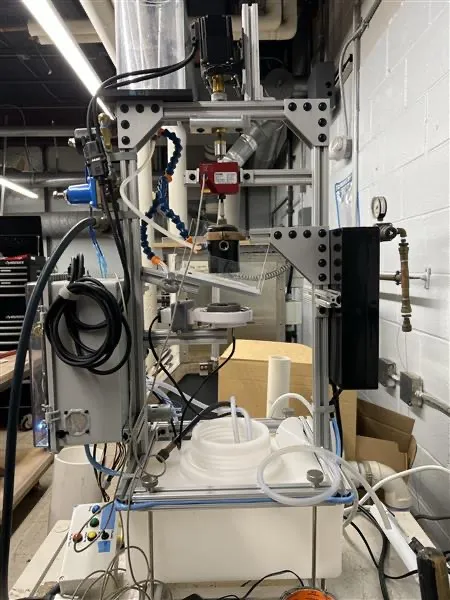 Completed test robot — aluminum extrusion frame, power supply box, electronic control box, stepper motor, and custom plumbing.
Completed robot — full assembly
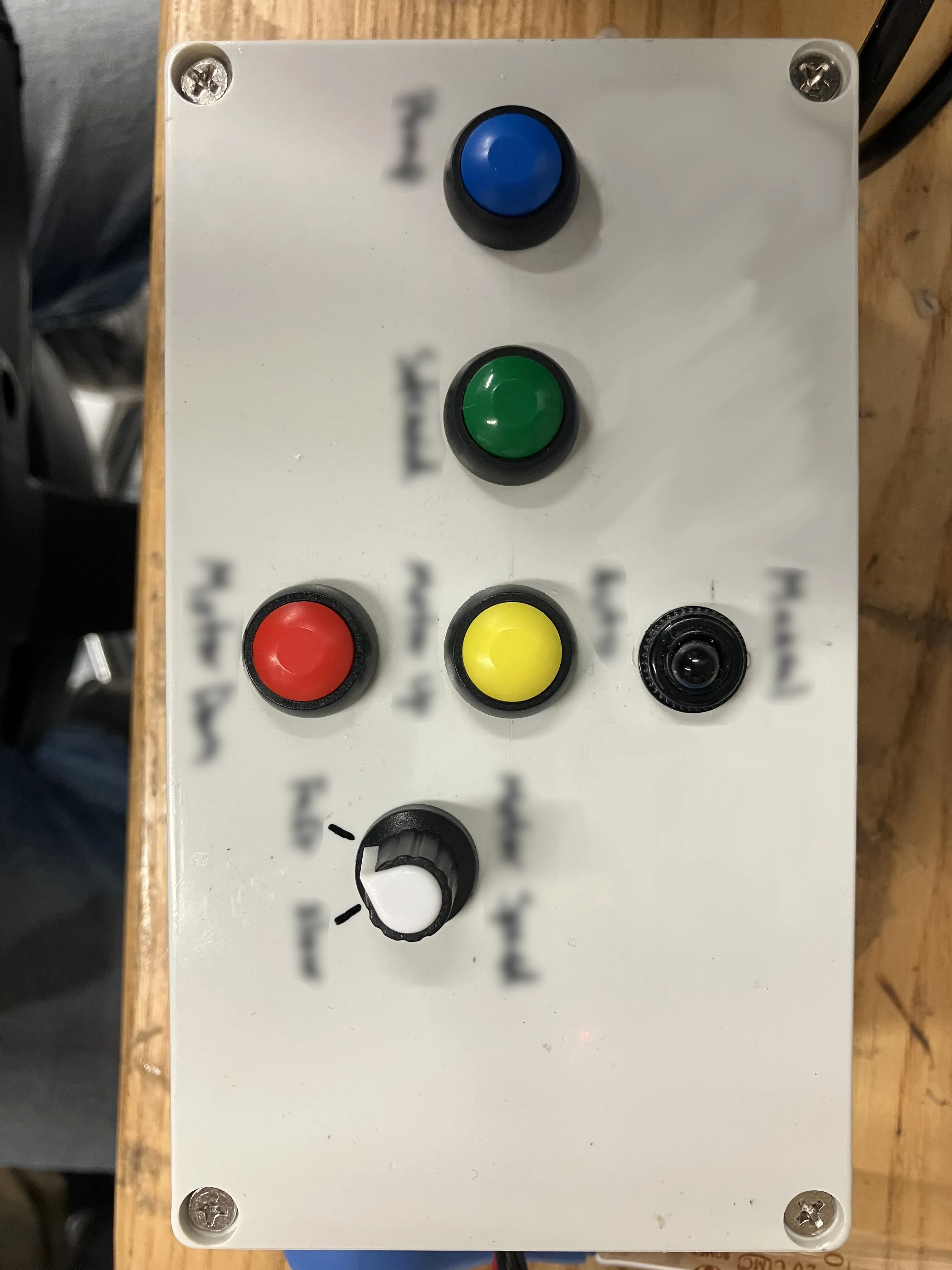 Custom control box — manual control and mode switching.
Control box — hand-labelled manual control and overrides
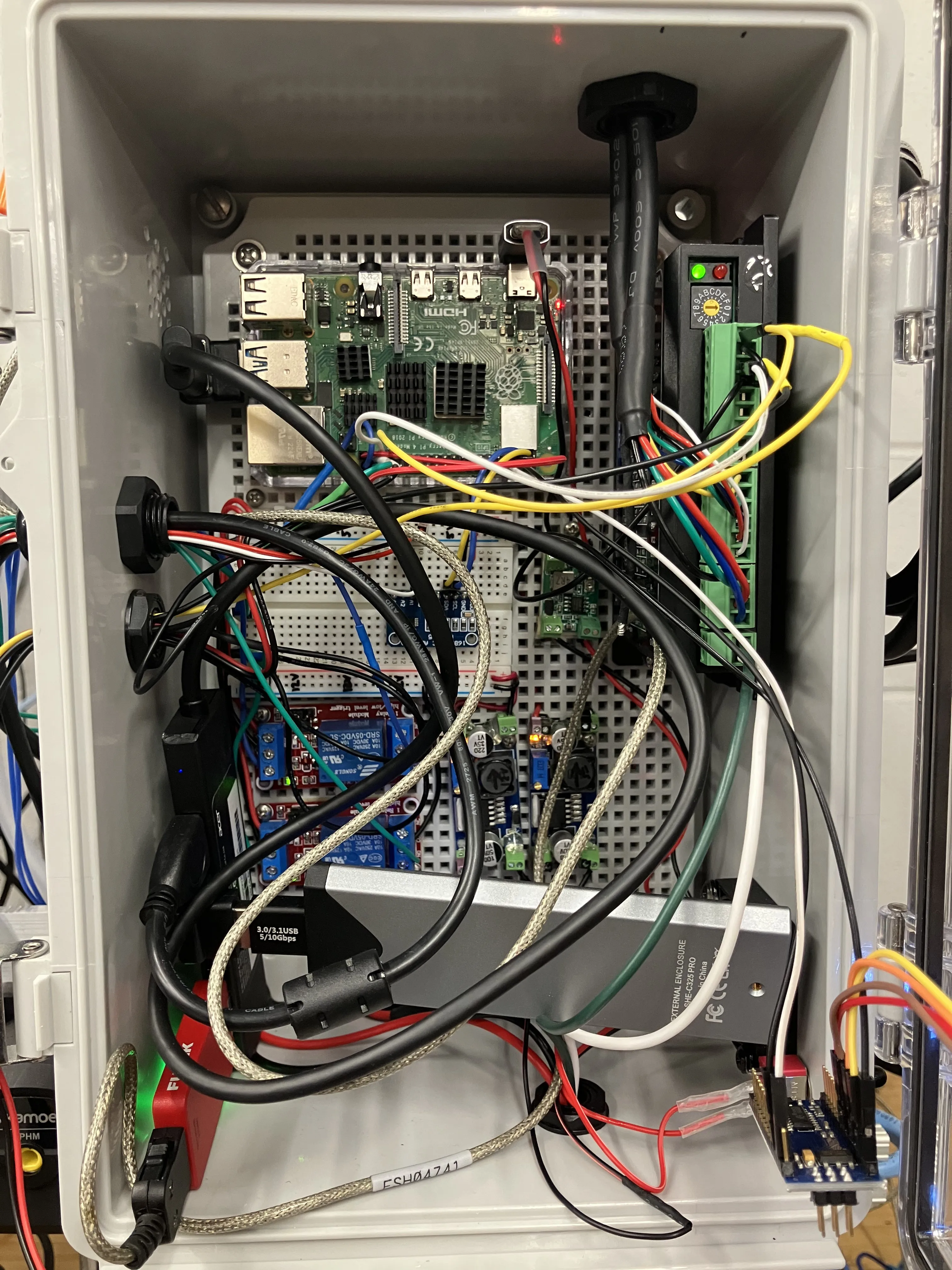 Internal electronics — Raspberry Pi, relay boards, and motor controller wired into a weatherproof enclosure.
Electronics enclosure — Raspberry Pi + relay stack
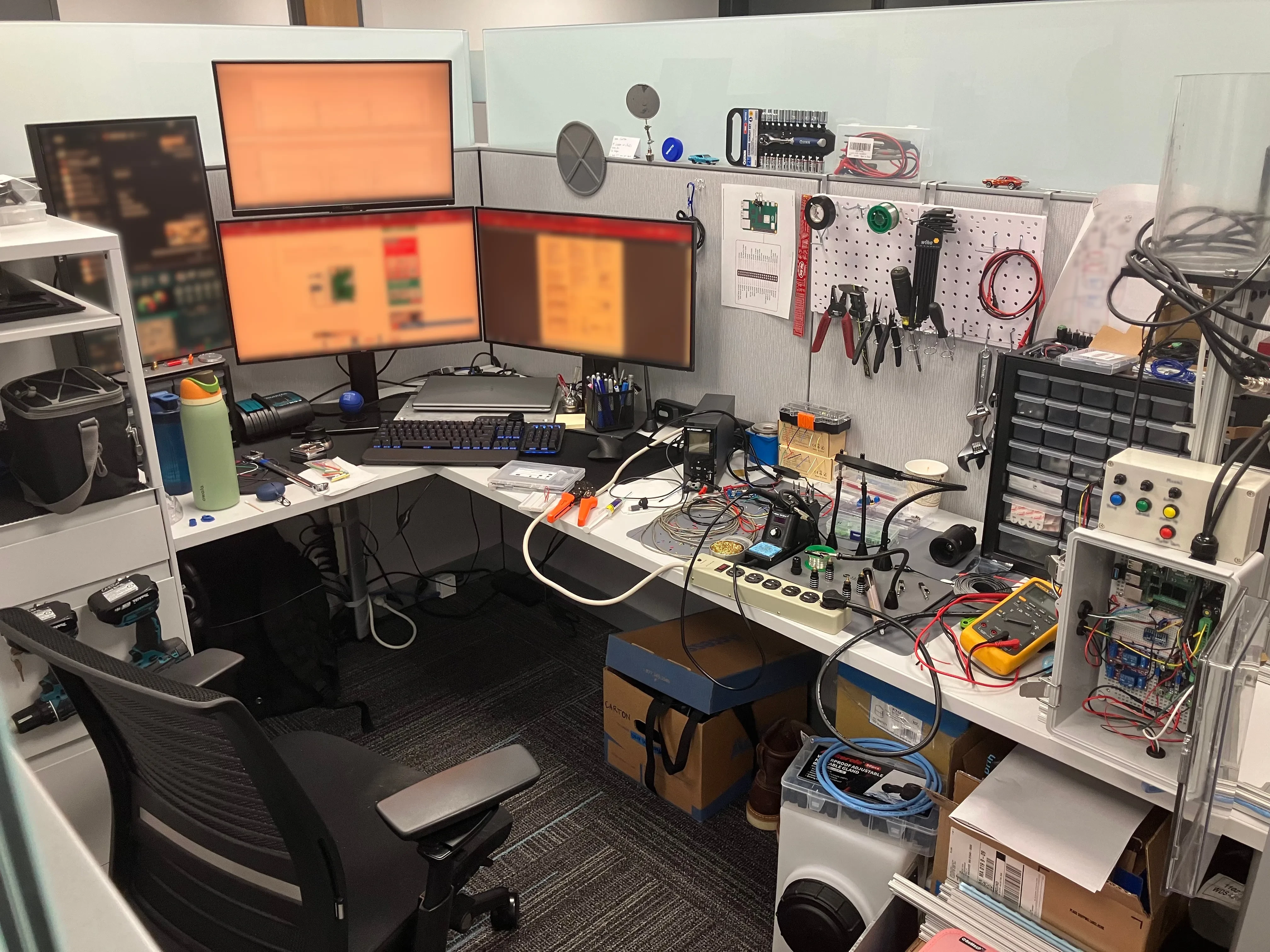 Development workspace — soldering station, test bench, and electronics workbench during the build phase.
Development workspace during the build phase
Outcome
- Eliminated 160 labor hours per week of manual testing.
- Findings documented to inform a reusable design guide for future automation projects.
- Established a foundation for future automated test development at Watts Water.